NVIDIA Research · AI for Science

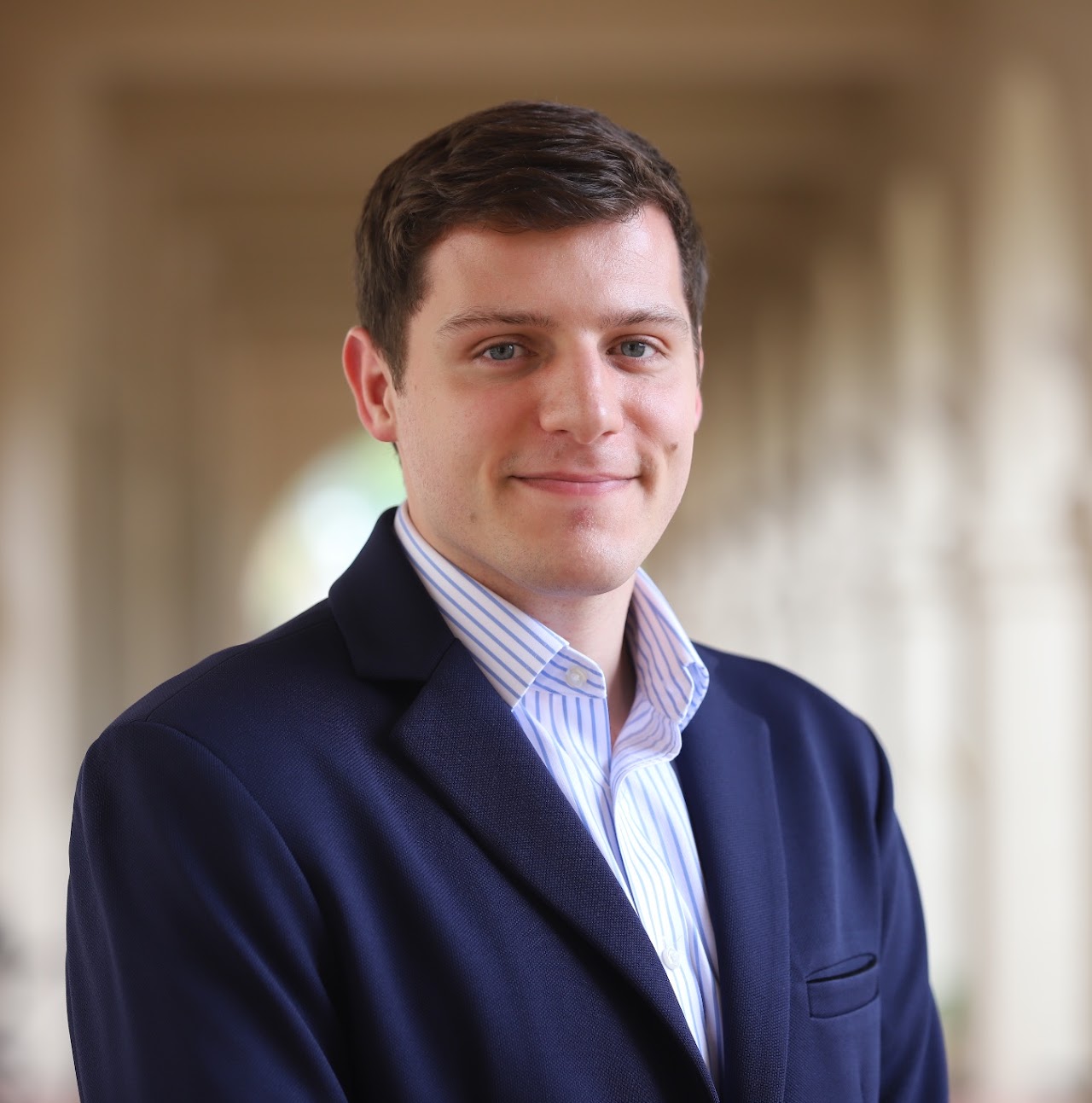
Portrait of Valentin Duruisseaux

Valentin Duruisseaux

Accelerating scientific computing from simulation to design

I leverage computational mathematics and machine learning to develop scalable methods to
accelerate scientific simulations, computational discovery, and engineering design.

Research Scientist at NVIDIA Research in the AI-Aided Engineering group

Portrait of Valentin Duruisseaux
NVIDIA

AI-Aided EngineeringAIE develops foundational models and algorithms for physical systems. These models are trained on observational or simulation data to approximate complex physical processes efficiently, while preserving the geometry, physical conditions, and uncertainty needed for scientific and engineering use.

Explore AIE

Research

Accelerating science and engineering with physics-informed machine learning

My research brings together operator learning, numerical analysis, and scientific computing to accelerate high-fidelity scientific simulations. I develop surrogates that incorporate the relevant governing equations, geometry, symmetries, and constraints, while maintaining generalization across discretizations, resolutions, parameter settings, and operating regimes.

The resulting models complement traditional solvers with efficient, differentiable tools for simulation and inverse design in scientific and engineering applications.

Operator Learning

  • Learning operators directly on function spaces rather than through finite-dimensional vector discretizations
  • Discretization-consistent architectures across grids, resolutions, and geometries
  • Mathematical foundations, architecture development, and
    open-source implementations

Physics-Informed Machine Learning

Incorporating governing equations, geometry, symmetries, and constraints in machine learning models.

  • Soft constraints through physics-based losses, with methods
    for irregular geometries and nonperiodic domains
  • Hard constraints through projection and architecture modifications for exact enforcement

Professional experience

From computational mathematics research to AI-aided engineering

Present

NVIDIA Research · AI-Aided Engineering

Research Scientist

  • Neural operators for high-fidelity physical systems
  • Geometry and physical conditioning across CAD, meshes, boundaries, and operating conditions
  • Reliable generalization and calibrated uncertainty across discretizations and physical regimes
  • Differentiable surrogates for simulation, optimization, and inverse design

2024-2026

Caltech Computing and Mathematical Sciences · Anima AI+Science Lab

Postdoctoral Researcher

  • Mathematical foundations and practical formulations of neural operators
  • Physics-informed operators using Fourier continuation, exact differentiation, and hard constraints
  • Generalization across discretizations, resolutions, physical parameters, and unseen geometries
  • Fast surrogate models across numerous applications, including fluid dynamics, weather and climate, nuclear fusion, photonics, quantum physics, neuroscience, and medical imaging
  • Differentiable surrogate models for inverse design and control across photonics, quantum systems, neuroscience, and fluid dynamics
  • Numerical discovery and stability analysis of singularity formation in nonlinear PDEs
  • Open-source operator learning through the NeuralOperator library

Earlier research internships

Los Alamos National Laboratory, 2022 · Machine learning for fast, structure-preserving simulation of
nearly-periodic Hamiltonian systems
Siemens, 2023 · Operator learning framework for reconstructing high-resolution scientific simulations
from coarse or sparse data

Education

Mathematical and physical foundations for interdisciplinary scientific computing

2018-2023

University of California San Diego

Ph.D. in Mathematics · Computational Science

  • Research under the supervision of Professor Melvin Leok
  • Geometric numerical integration and adaptive symplectic methods for accelerated optimization
  • Variational formulations and structure-preserving algorithms in vector spaces and on Riemannian manifolds
  • Structure-preserving dynamics learning for nearly-periodic Hamiltonian dynamics and controlled robots on Lie groups
Thesis ↗

2017-2018

University of Cambridge

Master of Advanced Study in Mathematics · Part III

Merit · Dissertation under the supervision of Professor Arieh Iserles on highly oscillatory quadrature

2013-2017

McGill University

Joint Honours B.Sc. in Mathematics and Physics

  • First Class Honours with Distinction · Minor concentration in Computer Science
  • Research on symplectic numerical integration of Hamiltonian systems with Professor Gantumur Tsogtgerel
  • Research on numerical bifurcation analysis of delay differential equations with Professor Tony Humphries